
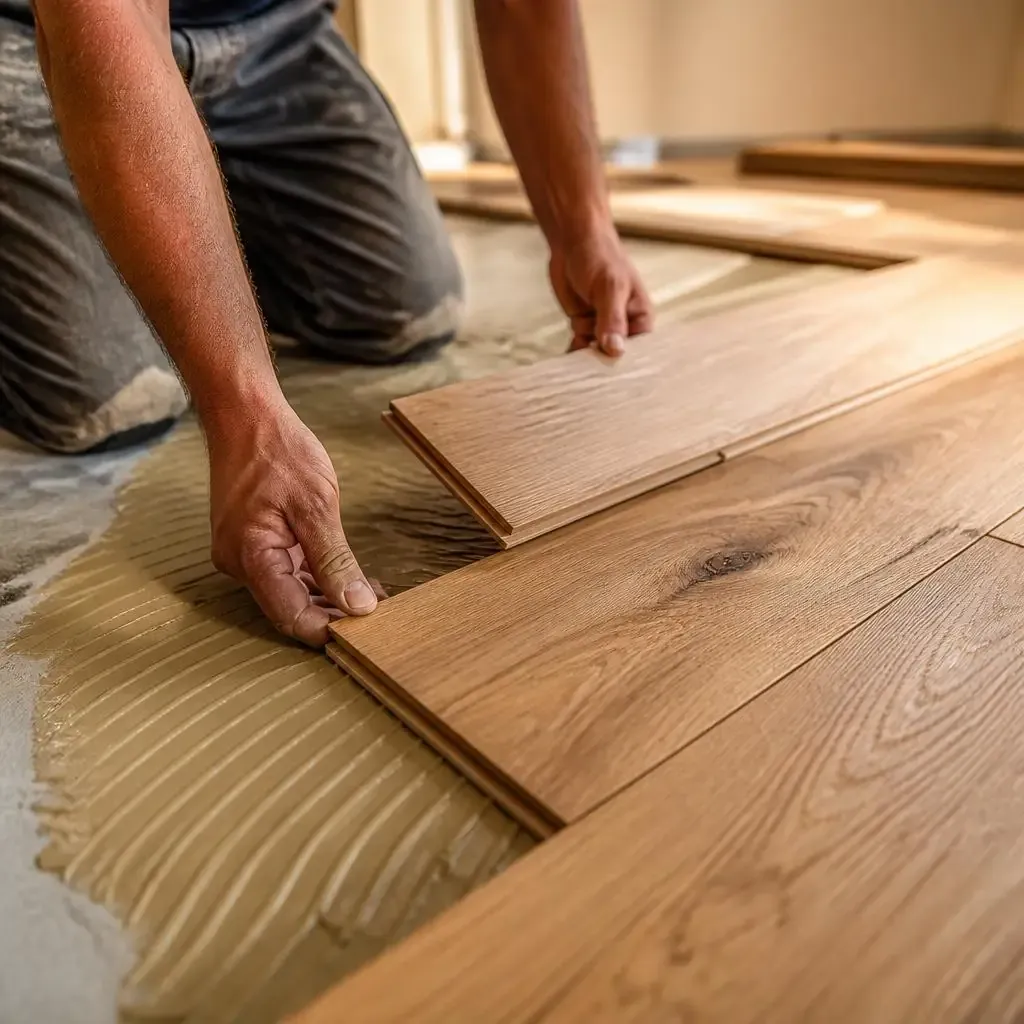
Grades describe how a floor looks, not how strong it is
When you shop for solid unfinished hardwood, the grade is a label for appearance. It tells you how much color change, how many knots and how many small marks to expect across the boards.
Under this appearance grading system, a lower grade does not automatically mean a weaker floor. A No. 2 Common floor shows more natural character than a Clear one. Product suitability, moisture limits, subfloor requirements and installation instructions still need to be considered separately.
Grade and grain are two separate choices. The grade covers character marks and color. The grain description covers how the log was cut. You can combine them, so a floor can be described by both.

What on grade means, and how much room there is
- 100%The target is for every piece to be on grade.
- Up to 5%The standard allows no more than 5% of pieces to be misgraded. Only pieces below the stated grade count toward that allowance.
Certified flooring is sorted against written specifications, and any product sold under a certified grade name must meet that grade description. Proprietary or special products can also be certified.
Check the product specification. This guide summarizes the NWFA/NOFMA grading information reproduced in the H&H Flooring hardwood grading guidelines, which credit the National Wood Flooring Association revision of April 2018. Ask your supplier for the current written grade specification and any product certification before ordering.
Clear, Select, No. 1 Common and No. 2 Common
The grades below follow the oak rules, ordered from the most uniform look to the most variation. These are plain language summaries, not the full rule text.
Clear
The most uniform look. Mostly heartwood with very few character marks, though natural heartwood color variation is expected.
- Bright sapwood is limited to a narrow strip, with a slightly wider allowance over a short part of a board
- Small burls, fine pin worm holes and small tight checks may appear
- Where those are absent, one thin brown streak up to three inches long is allowed per six feet of board
Select
More color movement, because heartwood and sapwood can sit side by side, plus a few small characters.
- Sound sapwood is not limited
- One small tight knot is allowed per three feet of board
- Pin worm holes, burls and a reasonable amount of slightly open checks may show
- Brown streaks should not run the whole length of a piece
- Spot filling is generally needed for open characters
No. 1 Common
Prominent color variation and a wider range of characters, for a floor with obvious personality.
- Open characters such as checks and knot holes are allowed when they are sound and fill readily
- Sticker stain, heavy streaks and flag worm holes are accepted
- Broken knots over half an inch, large grub worm holes and splits through the piece are not allowed
- Extremely dark pieces are left out
No. 2 Common
The most variation. Meant for homes and general use where character marks and contrast are welcome.
- Sound natural variation and manufacturing imperfections are allowed
- Open characters that fill readily are accepted
- Shattered or rotten ends, large broken knots, shake, advanced rot and excessive bad millwork are not allowed
- Deep dark machine burns are not admitted
Character carries into lower grades
Every character allowed in a higher grade is automatically accepted in a lower grade. That is why a lower grade looks busier, not stronger or weaker.
Unsound defects stay out
Even the most relaxed grade excludes pieces with unsound defects, such as rotten or shattered ends, advanced rot, shake and large broken knots. Variation is allowed. Damage that compromises the piece is not.
What Select and Better really tells you
Suppliers sometimes bundle grades, for example Select and Better, No. 1 Common and Better, or No. 2 Common and Better. Two rules keep that fair.
- The lowest grade allowed in the bundle can be no lower than the lowest grade named. In a Select and Better lot, nothing below Select belongs.
- The average board length minimum for the lowest grade named becomes the standard for the whole combined grade.
In practice, the lowest grade listed governs the bundle. A combined grade may include higher grade boards, with the lowest named grade setting the minimum appearance standard.
Plain, quarter and rift sawn describe the cut
Grain is about how the log was sawn, which changes the pattern on the face of the board. It does not change the grade. A floor can be Select and quarter sawn, or No. 1 Common and plain sawn.
Plain sawn
A plain sawn or plain product, and a floor with no grain designation at all, may contain any mix of plain sawn, rift sawn and quarter sawn pieces.
Quarter sawn
At least 50% of each piece must show quartered characteristics. In cross section, the annual ring meets the face at an angle between 45 and 90 degrees. Grain lines run mostly along the length of the piece, and medullary ray flecks are present and wider than 1/16 inch (about 1.59 mm).
Rift sawn
At least 75% of each piece must show rift characteristics. In cross section, the annual ring meets the face at an angle between 30 and 60 degrees. Grain lines run mostly along the length of the piece, and medullary ray flecks are narrower than 1/16 inch (about 1.59 mm).
Quarter and rift sawn
A combination of quarter sawn and rift sawn pieces.
Quarter and rift side by side. Both specifications call for grain lines mostly parallel to the board length. Quarter sawn requires at least half of each piece to show its characteristics, with ring angles of 45 to 90 degrees and wider ray flecks. Rift sawn requires at least three quarters of each piece, with ring angles of 30 to 60 degrees and narrower flecks.
Questions worth asking your supplier
- Which grade and grain description does this product carry, and is that written on the order?
- Is the product certified, and can you see the current specification?
- If the grade is combined, what is the lowest grade included?
- What average board length should I expect?
- Can I see a sample of the boards, not only a single selected piece?
Talk it through with H&H Flooring
Not sure which grade suits your rooms? Call (423) 498 2200 or email info@hhflooringllc.com.
Find the character that feels right
Talk with H&H Flooring about hardwood grades, grain patterns, and the look you want for your room.